Upgrade
Upgrade between minor versions and across v8 → v9: back up first, read the database changes, roll the binaries.
Last reviewed
Upgrading Nightingale means replacing the binary and restarting: the schema is brought up to date by the process itself at startup, and there is no separate migration command. The work is at the two ends — backing up before, and confirming afterwards that the upgrade actually happened.
Before you start
Keep a copy of four things:
mysqldump -u root -p n9e_v6 > n9e_v6.$(date +%F).sql
cp -a /opt/n9e/etc /opt/n9e/etc.bak
cp -a /opt/n9e/n9e /opt/n9e/n9e.$(./n9e -version)
mv /opt/n9e/integrations /opt/n9e/integrations.bak
The database is the only one you cannot recreate; the other three just save time. ./n9e -version
prints the running version — putting it in the backup filename means not guessing during a
rollback.
Then read the release notes for the target version. Across a major version, start with v8 to v9, which lists the config sections you have to add by hand.
A minor version upgrade
Single instance:
systemctl stop n9e
tar zxf n9e-v<new-version>-linux-amd64.tar.gz -C /opt/n9e
diff -u /opt/n9e/etc.bak/config.toml /opt/n9e/etc/config.toml
systemctl start n9e
Three things to watch:
- replace
integrations/wholesale, do not merge. It holds the dashboards and rule templates shipped with the version, and mixing old files in produces templates that no longer match; diffthe config, do not overwrite it. A new version may add sections, and the ones missing from your old file stay silently off;- hard-refresh the browser, or it keeps serving cached js.
Rolling a cluster
With several instances, take them one at a time rather than restarting together:
- stop the first instance. Its rules are picked up by another within 30 seconds;
- replace the binary, diff the config, start it;
- check System → Alerting engines until it reappears with a live heartbeat;
- wait a little longer — a freshly started instance delays evaluation (30 seconds by default) while configuration syncs from the database into memory;
- only then move to the next host.
Alerting never stops during this, because at every moment at least one instance is evaluating rules. Restarting them all at once buys you a window where nobody is.
If you run n9e-edge, upgrade the edge processes in the same pass — not the centre alone.
Verifying afterwards
Three checks, in order:
curl -s http://127.0.0.1:17000/api/n9e/version
grep -i "failed to migrate table" /opt/n9e/logs/*.log
Expected result: the version is the new one, and there are no migration failures in the log.
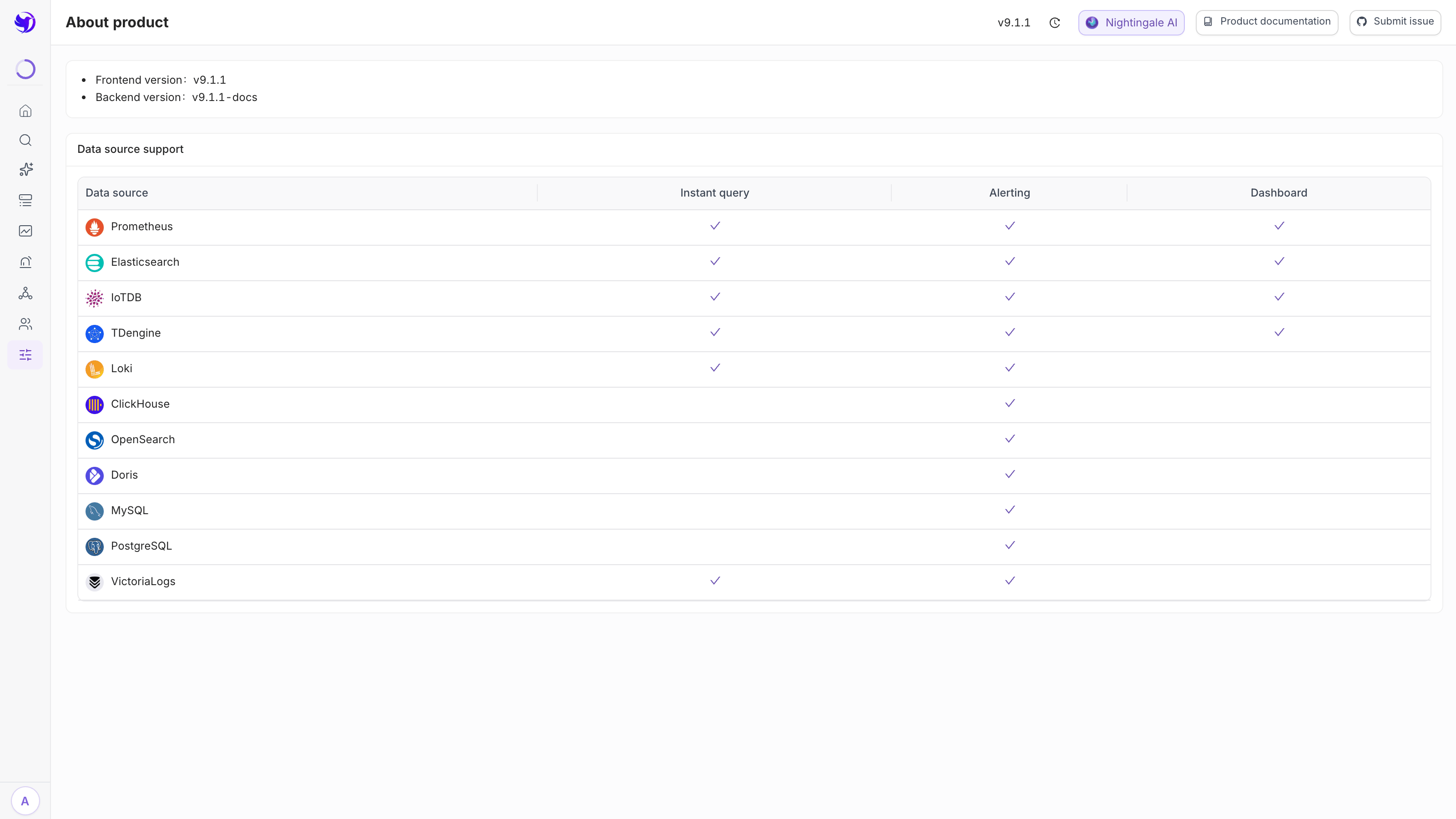
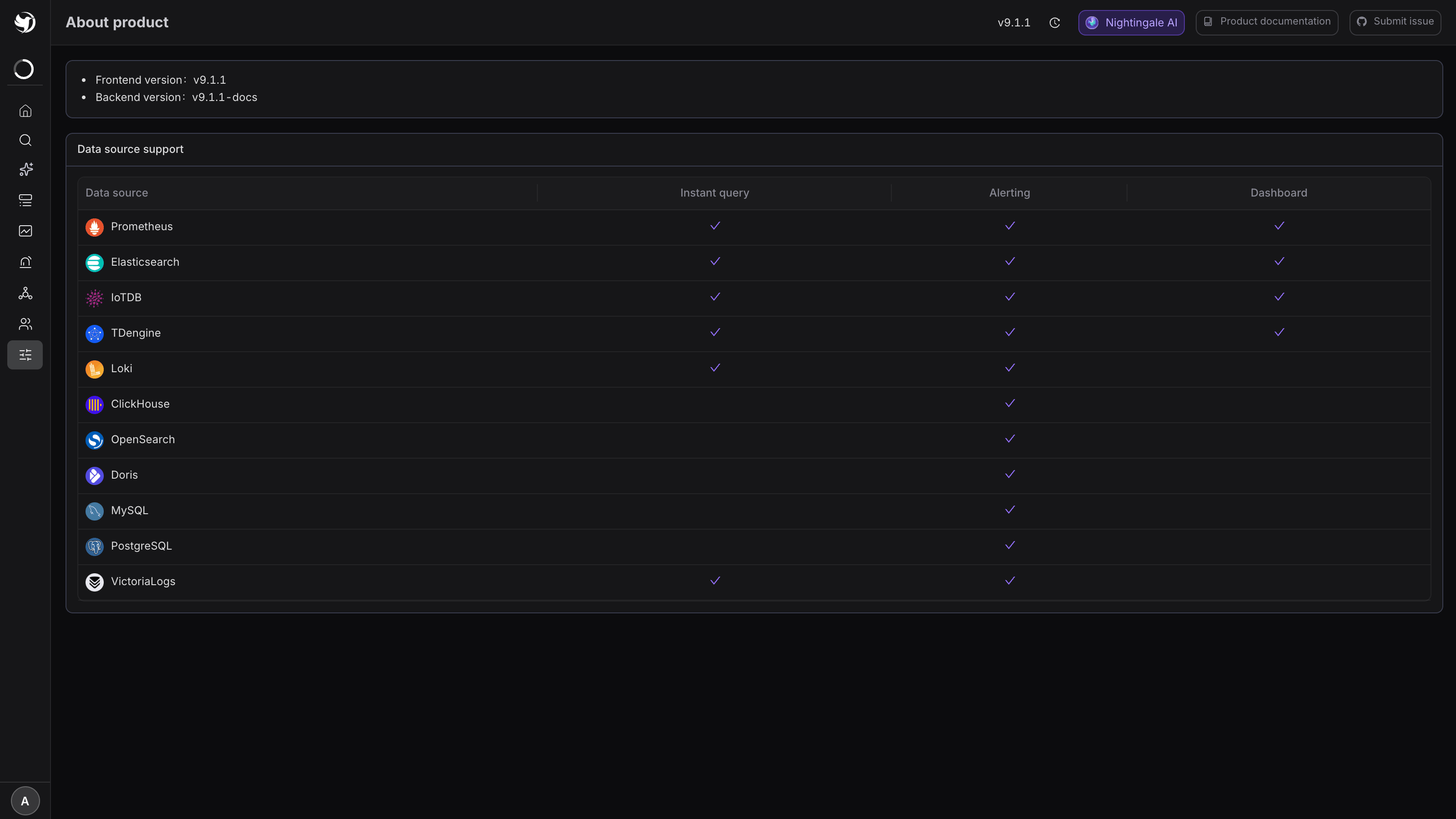
Then open System → About; the version there should match the command line:
Finally check that nothing broke: open a dashboard and confirm charts render, and look at the events
page to confirm new events are still being produced. Indexes on the large tables
(alert_his_event, notification_record) are built asynchronously after startup and can take
tens of minutes on a big database. The service is usable throughout — do not restart just because
you see index-building in the log.
Next
- Rollback — when the upgrade does not go well
- v8 to v9 — the cross-major breaking points
- Upgrade and database migration — how schema migration works